

Capsule — The Language of Plants
Some languages don’t seek noise. The green world speaks by aligning before saying.

🌍 Disponible en : (FR) Version française
There are languages that never ask to be heard.
Languages with no voice, no alphabet, no promise of being understood.
They settle slowly, like an ancient breath no one ever transcribed, into the small gestures of the living world.
Among them, the language of plants.
A language that calls to no one, yet exists — patient, unwavering.
This is not the “language of flowers”
We know the other one — the symbolic system where flowers speak for us: a red rose for desire, an anemone for loss, an iris for trust.
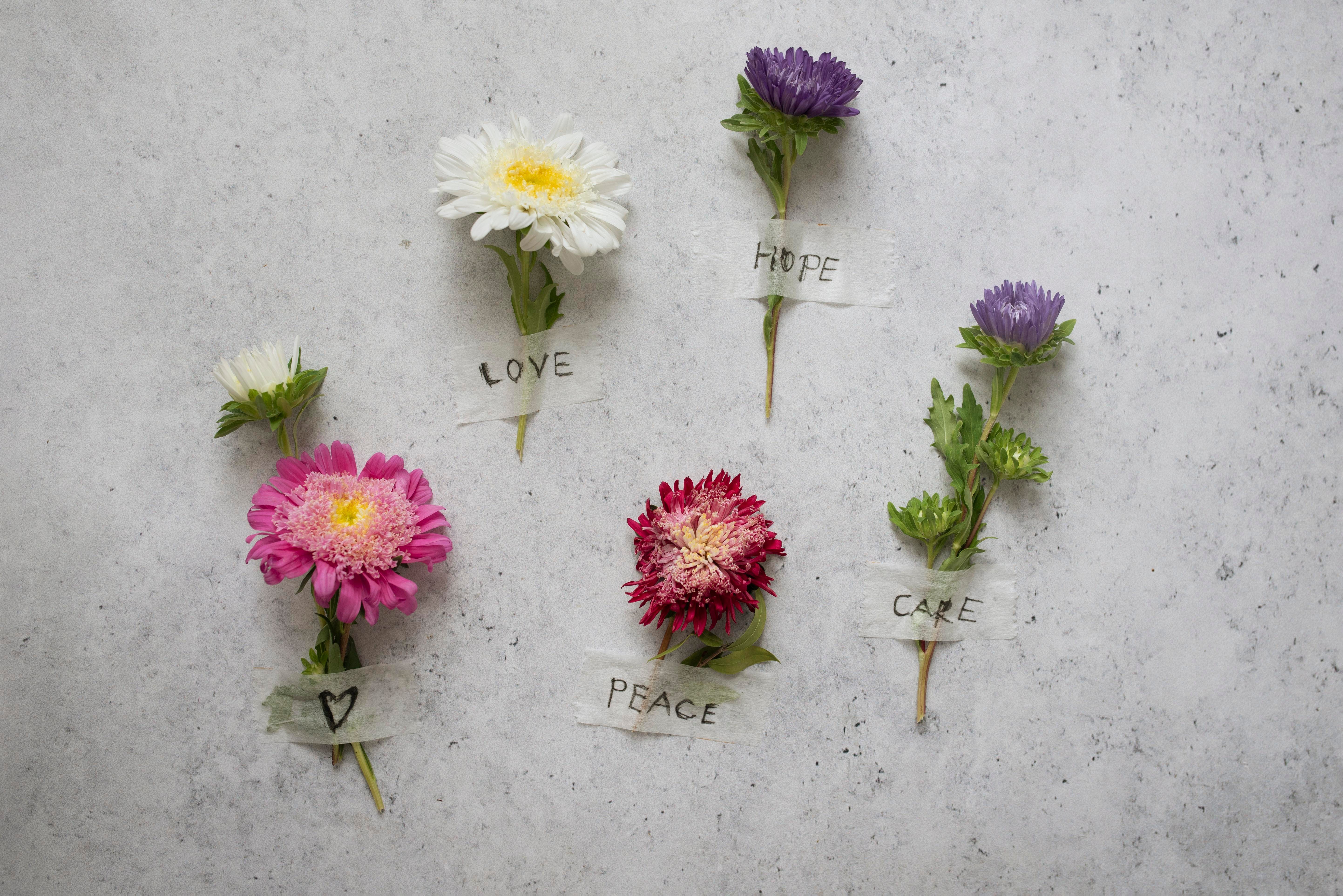
That language is a mirror: a human alphabet laid upon petals.
But that is not the one I’m exploring here.
Plants do not need our symbols in order to exist.
They speak differently.
Lower.
Slower.
And perhaps more truthfully.
A language that isn’t trying to be a language
Plants begin by saying where they are.
They speak through posture: what their roots allow, where the light invites them, what the soil asks of them in order to continue.
They speak by inclining a stem. By thickening a trunk. By abandoning one direction to choose another. By storing the light they transform in their quiet, secret chambers.
This language has no words, but it has intentions.
It says:
“I work with what is given.
I sense.
I choose.
I adjust.”
What this language changes in us
Once you begin to hear it — even faintly — something shifts.
You realize the world is not built only from declarations, certainties, or straight lines.
There is a syntax where listening matters more than momentum, where response comes before decision, where strength is measured by endurance, not by noise.
Plants show us a way of existing that is not about imposing, but about finding one’s place — and holding it with a quiet, lucid tenderness.
A language of slowness, attention, and attunement
Plants do not “say” anything. They attune.
They attune their leaves to the light, their roots to the depth available, their seasons to the space they’re given, their strength to their fragility.
Sometimes this attunement happens in full sun. Sometimes it chooses the dark.
Some plants speak only once — one night, and never again.
The queen of the night (Selenicereus grandiflorus), Hylocereus undatus — the dragon fruit, the biennial evening primrose.
Three plants.
Three lives of patience.
Three strategies that wager everything on a single moment.
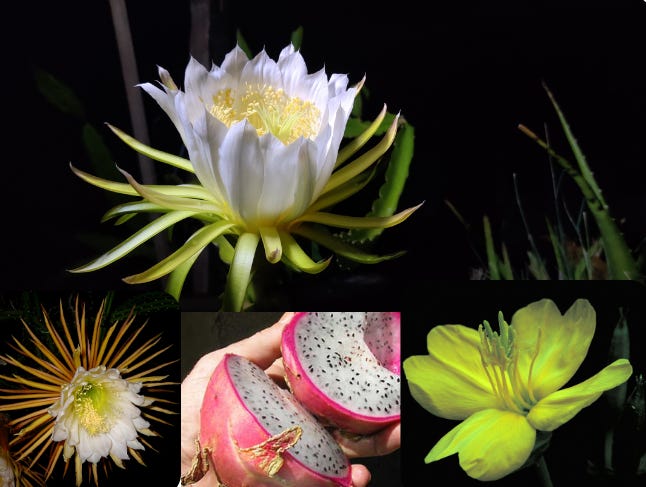
They open when no one is looking, for a very specific audience: bats, hawk moths, night pollinators.
They do not seek crowds — they seek the perfect accord. And it is this rarity that makes them unforgettable.
In their silent language, visibility is never about quantity, but precision:
the right gesture, at the right moment, for those who are meant to receive it.
Not speed, but alignment.
Not exposure, but presence.
Not pressure, but adjustment.
A language that perceives more than we believe
Some discoveries force us to reconsider everything.
For years, we assumed plants were indifferent to the sounds of the world.
And yet.
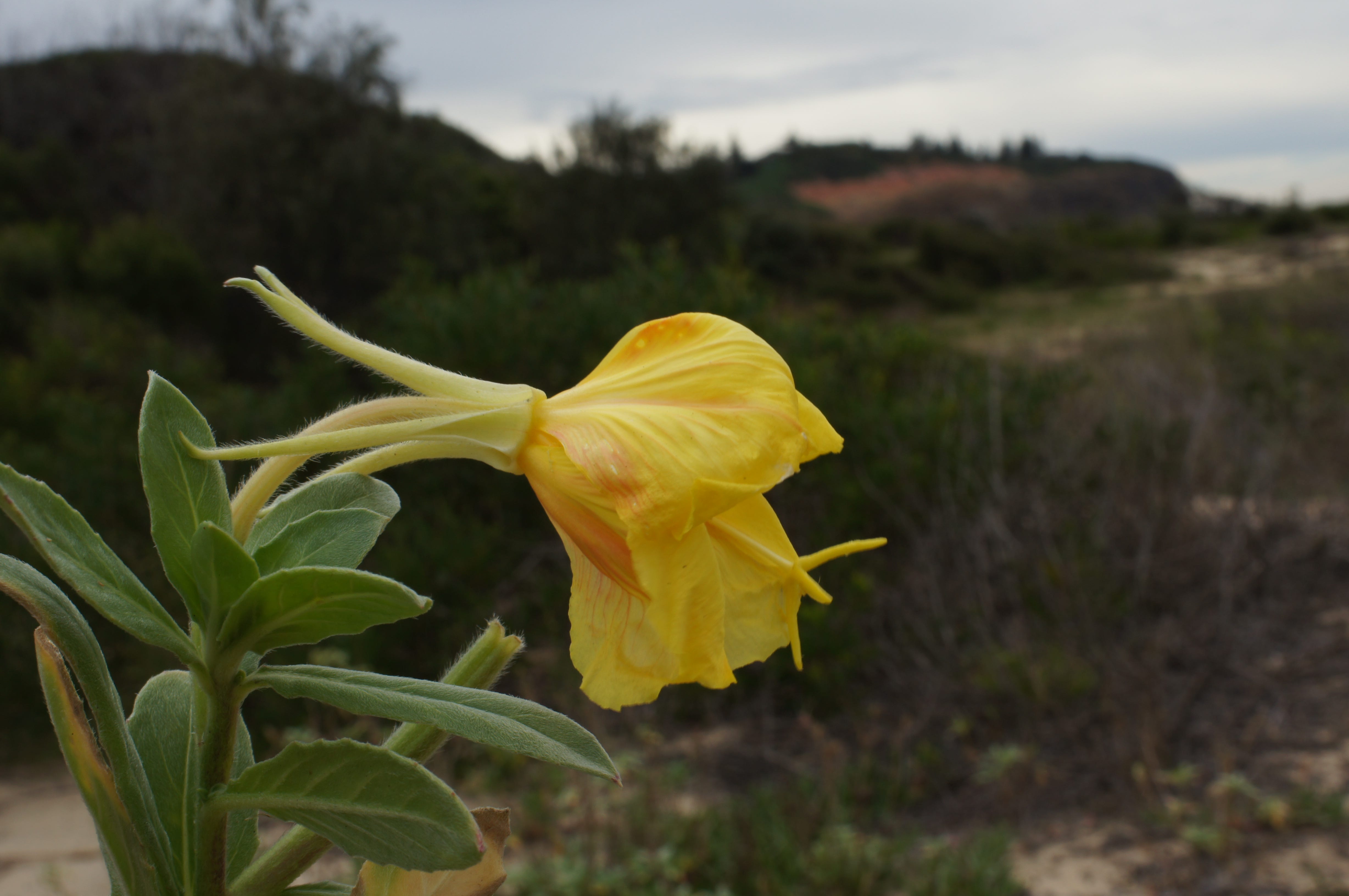
Researchers showed that the evening primrose, Oenothera drummondii, responds to the mere buzzing of a bee: its petals vibrate — like a living membrane — and its nectar becomes sweeter in under three minutes.1
Not for any sound: only for frequencies close to pollinators’ wings.
As if the flower recognized an unseen visitor and prepared to offer what it has at its best.
A language with no ears, no intention, no words — and yet: a precise, delicate response.
Entering the green language
Listening to plants is like reading a text that was never written for us.
And perhaps that is why it feels so precious.
This language does not try to persuade.
It does not wait for us. It has nothing to sell. It tells no stories.
It shows.
It suggests.
It offers.
And when we allow ourselves to listen, we discover a different kind of clarity — one that comes not from words, but from the inner movement they leave behind.
Capsule Chlorophylle EN Edition
by Franz | 1erCopyVegetal 🌿