

Capsule — Plasticity: the subtle art of changing without losing yourself
(with a few secrets plants don’t often reveal)

🌍 Disponible en : (FR) Version Française
Some plants seem perfectly still.
And yet they change direction more often than we change our minds.
All it takes is standing near a winter stem:
its angle is never quite the same as the day before.
One degree to the right,
two degrees toward the light,
a small retreat from a patch of cold air.
Nothing heroic.
Nothing spectacular.
Just a precise, quiet adjustment.
Botanists call this phenotypic plasticity—
an organism’s ability to modify its architecture in response to the environment.
And in plants, this plasticity is anything but minor.
🟢 Fun fact #1: plants “see” their surroundings better than we think
A leaf can actually read the quality of light.
It distinguishes blue, red, far-red.
It even knows whether it’s shaded by a neighbor by sensing the red / far-red ratio.
That simple ratio tells it which way to grow.
No eyes.
No brain.
Just physics—and a surprising amount of elegance.
phototropism — light as a silent compass.
—
🟢 Fun fact #2: some plants reshape themselves… in real time
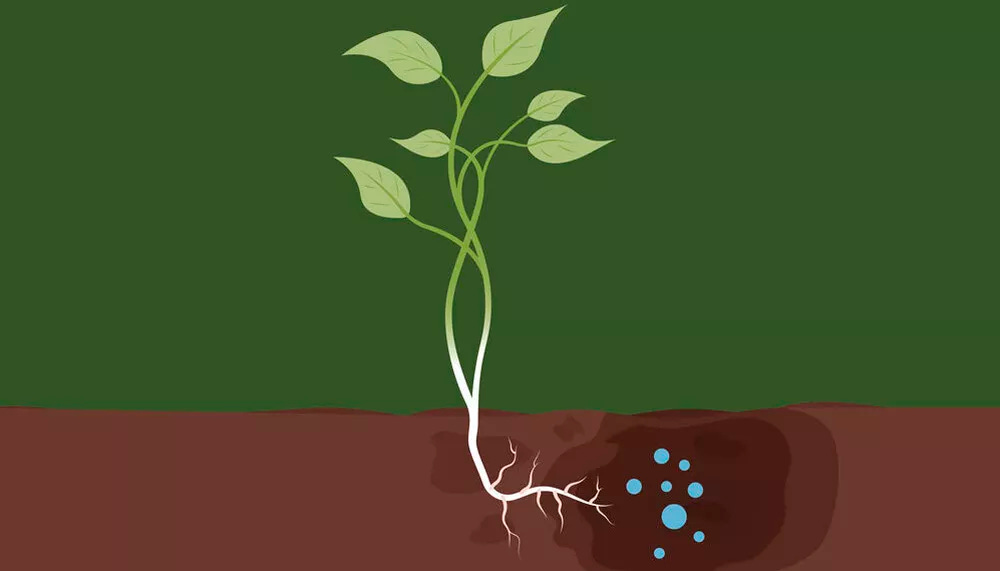
Maize roots can change trajectory in 15 minutes
when they detect a slightly wetter patch of soil nearby.
They test, compare, turn.
In living systems, stubbornness is rarely a sign of strength.
—
🟢 Fun fact #3: a plant can rewrite its whole structure when the unexpected happens
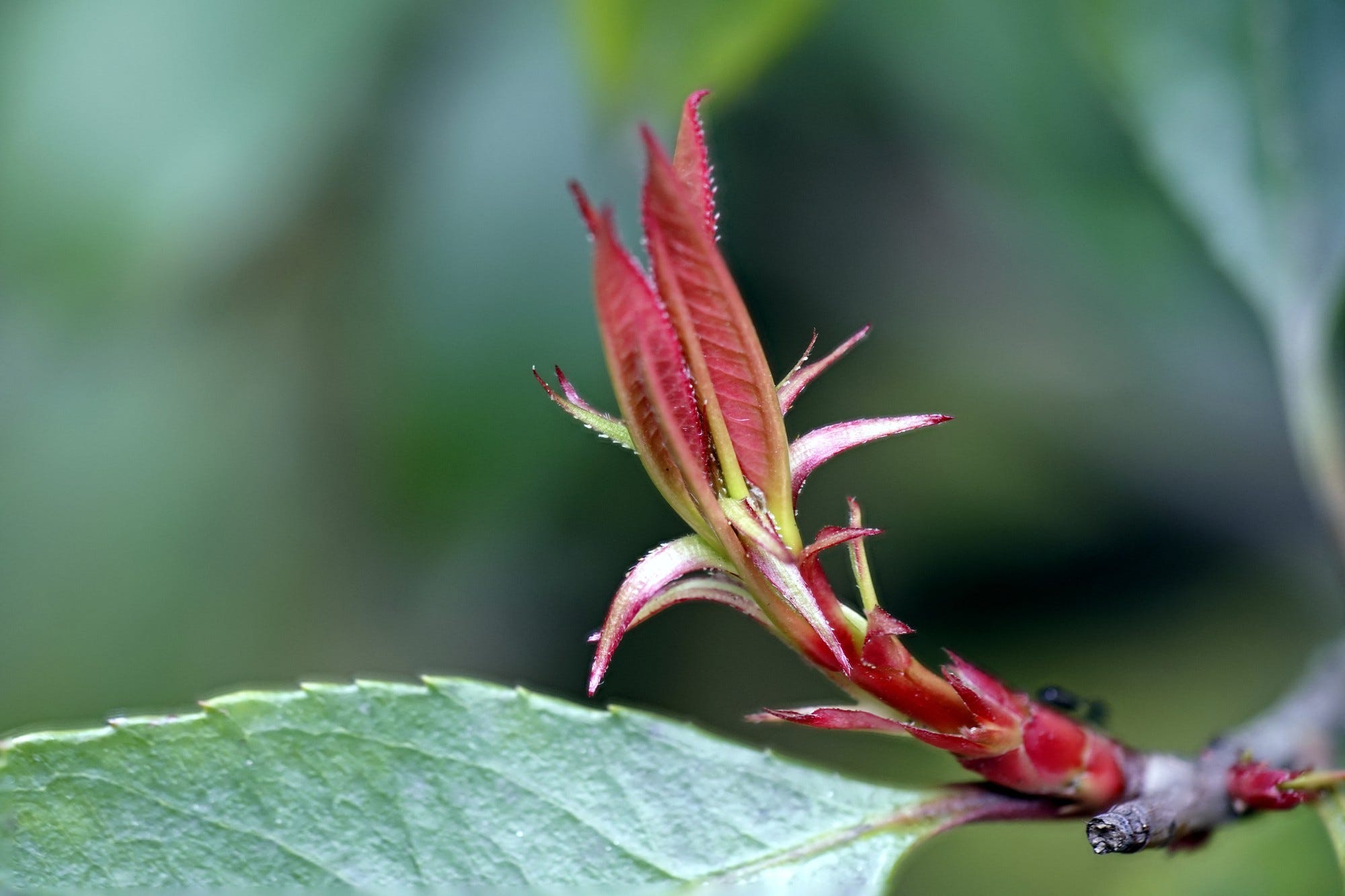
Cut the apex of a young shoot, and within days,
a lateral bud becomes the new conductor.
This is known as apical dominance—
a hierarchical system that can be reversed at will.
In human terms, it would be like working in an organization
where anyone can step into leadership when the context calls for it.
—
🟢 Fun fact #4: bonsai trees are masters of plasticity
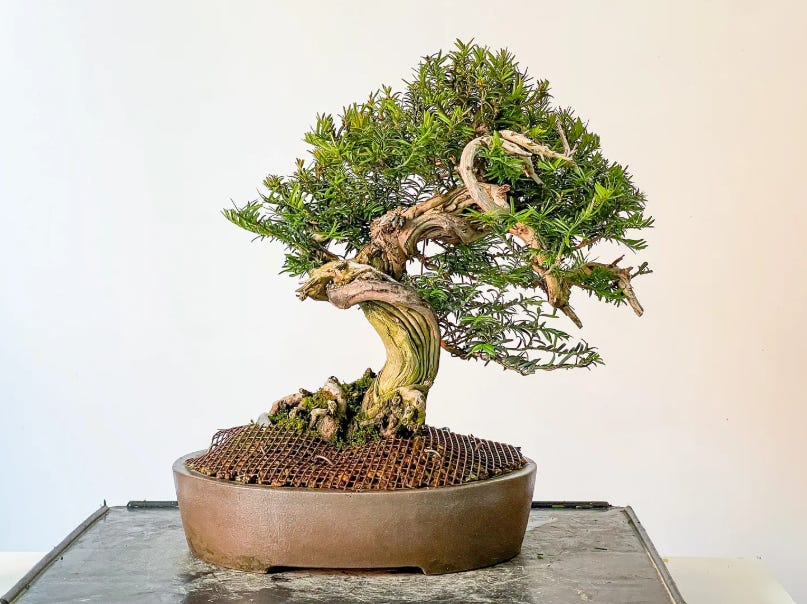
Their trunks aren’t “naturally twisted.”
They rely on cellular tension responses (mechanosensing)
to strengthen one side, soften the other,
and hold gravity-defying shapes in perfect balance.
At the microscopic scale, it’s a choreography of constant micro-adjustments.
—
🟢 Fun fact #5: plasticity saves plants far more often than resistance
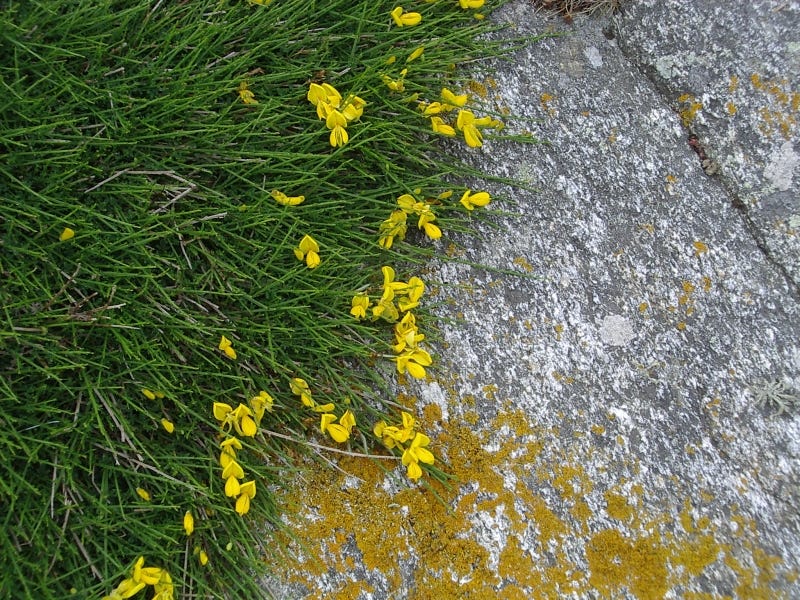
Some alpine species change the shape of their leaves every single year,
depending on wind intensity and cold duration.
No fixed blueprint.
No “ideal form.”
Just whatever lets them survive another cycle.
Constancy isn’t found in shape—
but in continuity.
Watching these tiny shifts,
I no longer see the zigzags in our human paths as hesitation.
I see them as living responses.
Changing your angle is not losing your way.
It’s the most accurate way to keep growing.
And sometimes, a single degree of deviation
reveals a light we hadn’t noticed before.
Like winter stems,
our trajectories rarely grow in straight lines.
They follow light more than plans.
And that isn’t weakness—it’s wisdom.

Capsule Chlorophylle EN Edition
by Franz | 1erCopyVegetal 🌿